SCARBOn Airborne Campaign: Behind the Scenes
Published: April 9 / 2026
SCARBOn Airborne Campaign: Behind the Scenes
Integration and Certification
Just before Easter, the SCARBOn airborne campaign kicked-off with a first week dedicated to instrument and aircraft preparation. A demonstration mission of the NanoCarb instrument - a lightweight spectrometer developed for monitoring CO2 and CH4 emission - focuses on assessing its performance. This demonstration is the final step of the prototype activities, previously started by its design upgrade, manufacturing, integration and acceptance testing performed jointly by UGA, ONERA and Absolut System.
In parallel, its capability to detect and quantify greenhouse gas (GHG) emissions from point sources (e.g. power plants) will be demonstrated. The aircraft also carries a hyperspectral camera, providing complementary imagery to support the interpretation of NanoCarb data.
Over several days, teams from ONERA, UGA, ICGC and Airbus GeoTech worked together at Sabadell Airport (Spain), supported by Absolut System, to complete instrument integration to the aircraft, certification activities, and ground testing - major steps before scientific flights can begin.
Integration work
The instrumentation team from UGA and ONERA first carried out a laboratory checks to ensure full calibration, followed by ground characterisation session. In collaboration with ICGC colleagues, the integration phase included:
- Installation and mounting of the NanoCarb instrument and hyperspectral camera interfaces onto the aircraft structure
- Mechanical checks to ensure all components were properly fitted within the aircraft given the procedure ensuring certification
Electrical Integration and System Verification
The next stage focused on electrical integration and system verification:
- Power supply and cabling for both instruments were fully installed
- The instrument passed its functional checks, confirming that the integration had been completed successfull
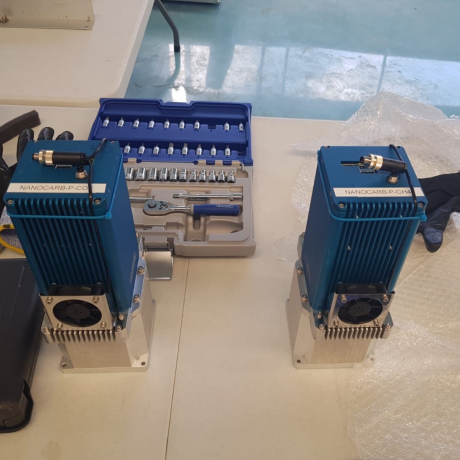
Start of NanoCarb instrument integration, Source: SCARBOn consortium
Ground certification testing
With all systems in place, a certified expert proceeded to ground testing with the aircraft engine powered on, ensuring that the instruments operated safely and reliably under flight conditions.
Design approval was obtained under a Design Organisation Approval (DOA) issued by the European Union Aviation Safety Agency. In parallel, the necessary flight authorisations were secured.
With integration completed, systems validated, and all required authorisations in place, the SCARBOn airborne campaign has now successfully passed this critical preparatory phase. The campaign is ready to move on to its next stage: the core scientific test flights in Germany.
The latest updates are also available on the SCARBOn LinkedIn profile: https://www.linkedin.com/company/scarbon-project/about
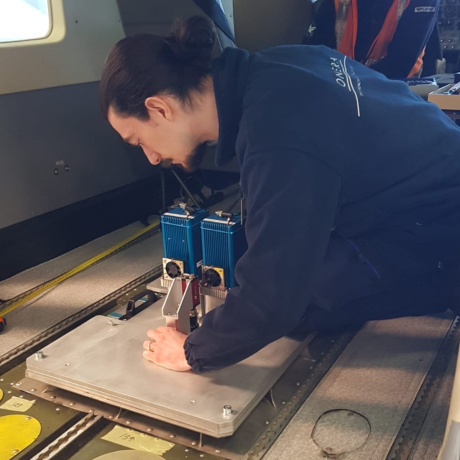
Installation of the NanoCarb instrument on the ICGC aircraft, Source: SCARBOn consortium
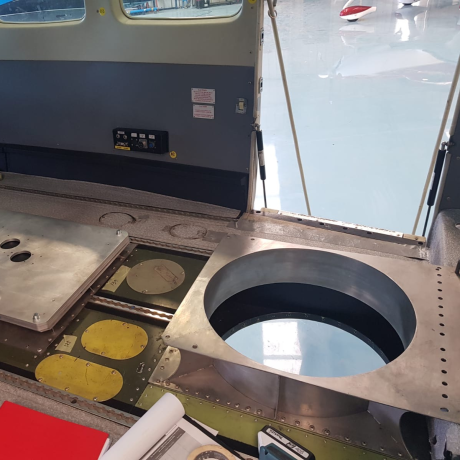
Interface plates are in place - ready for installation, Source: SCARBOn consortium
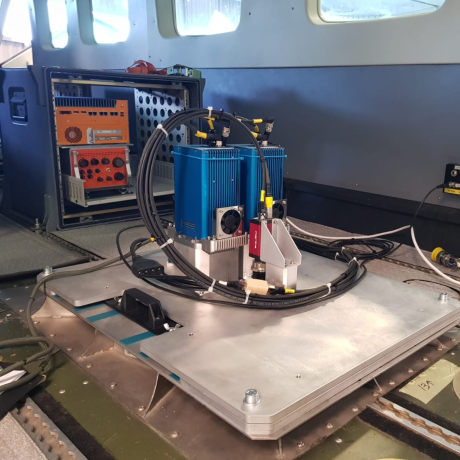
Power and cable installation for the NanoCarb instrument, Source: SCARBOn consortium
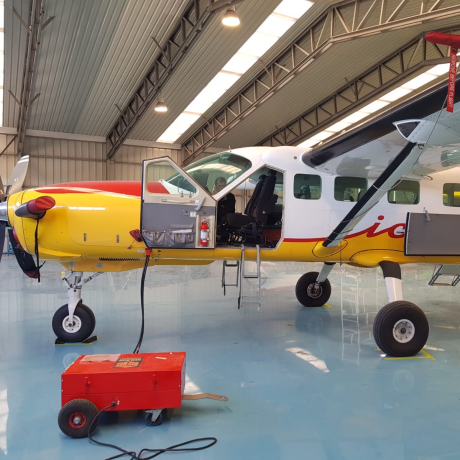
Pre‑flight verification to ensure all aircraft systems are working, Source: SCARBOn consortium